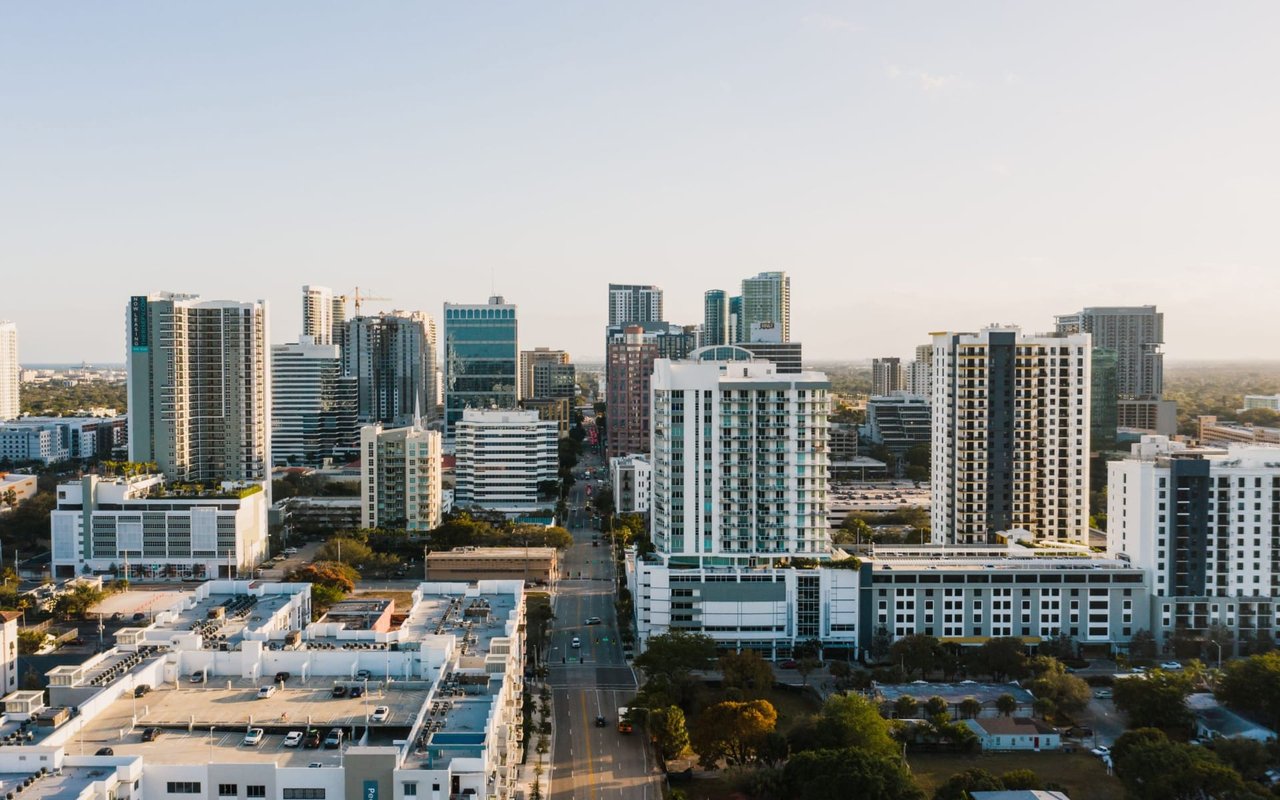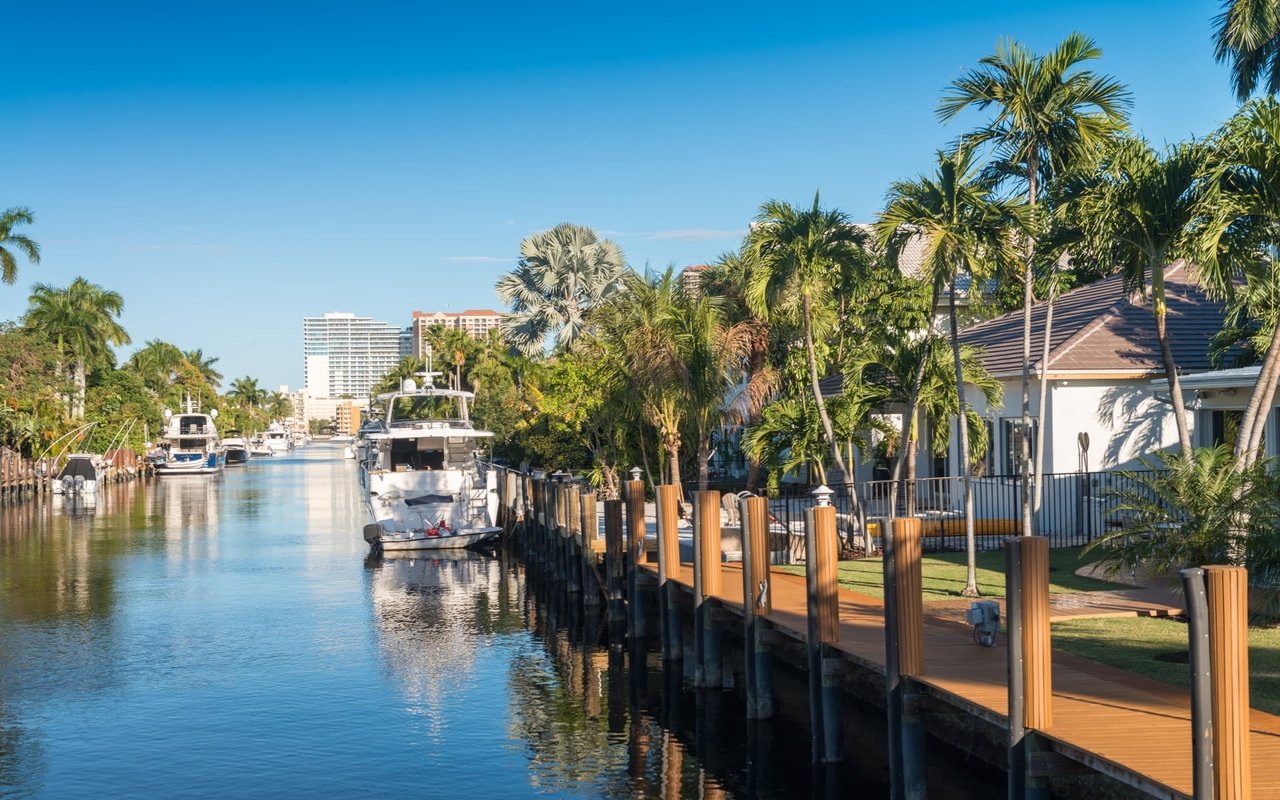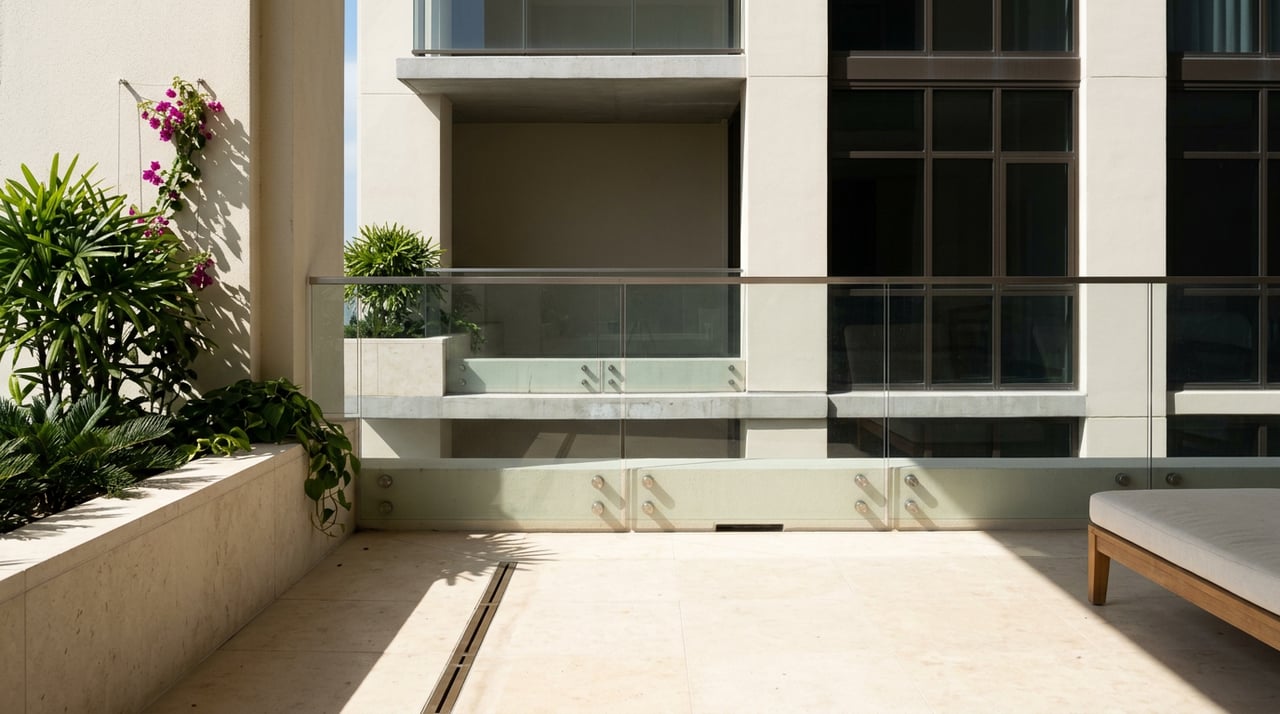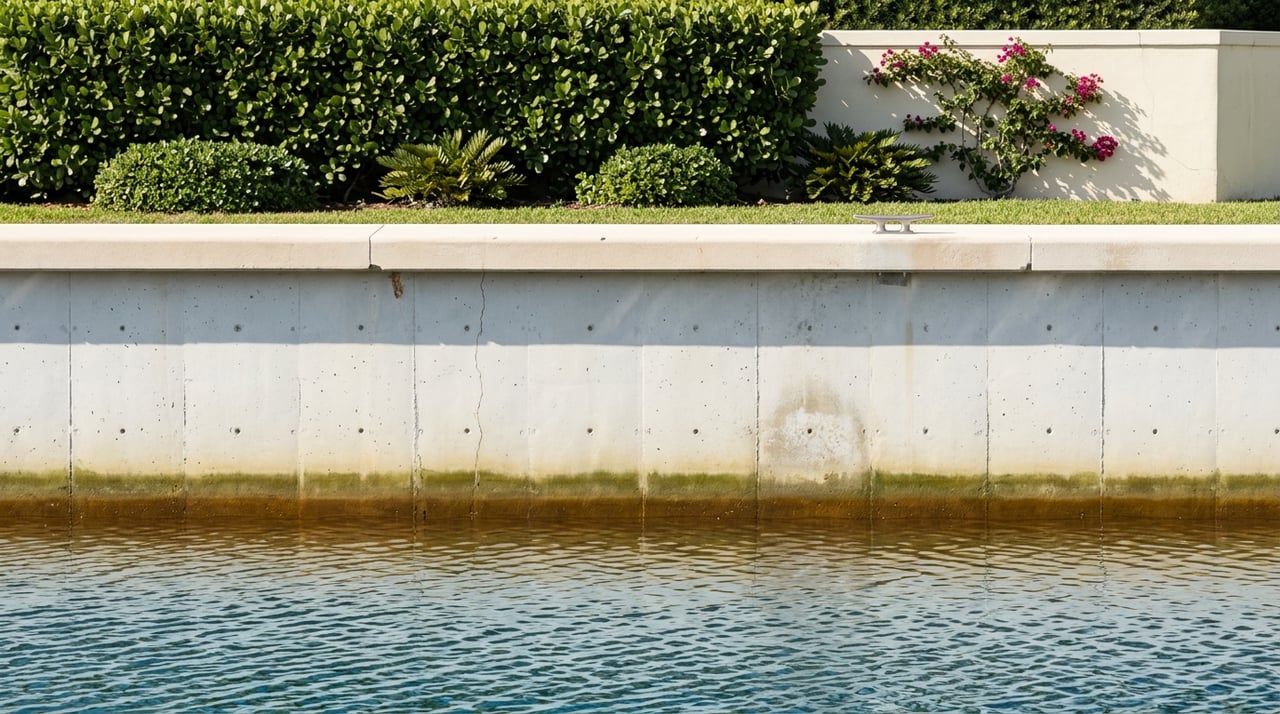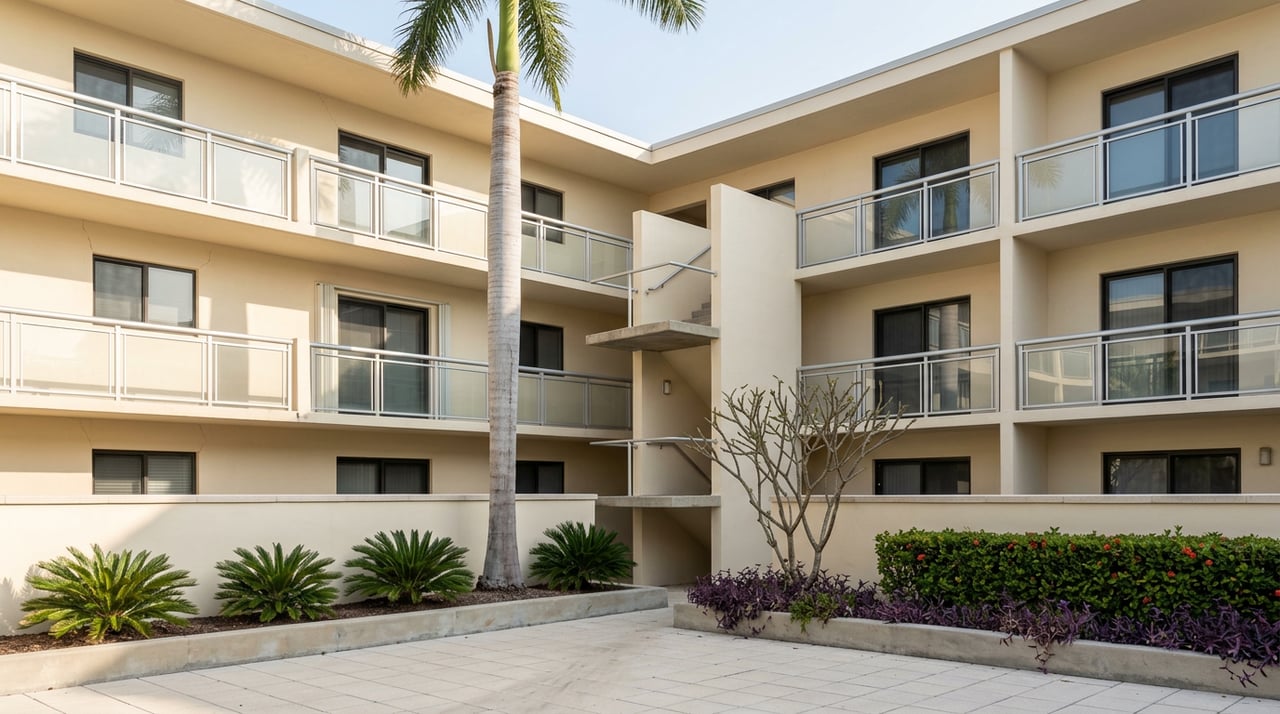
Walk two blocks through Lauderdale-by-the-Sea's old town and you can stand in front of buildings that behave like they belong to different decades of ownership, even though they sit on the same walk to the beach. Poinciana By The Sea went up in 1974, five stories, 96 units, the kind of straightforward mid-century modern massing that still defines most of the town's core. A short walk away, Ocean Place has finished its concrete restoration, replaced its roof, refinished its pool, and is sitting on reserves over $2 million with no assessment planned for this year. Same zip code, same beach access, same box on a buyer's search filter marked "condo." Very different balance sheets.
That gap is not random, and it is not really about age either, though age plays a part. It traces back to a zoning line most buyers never think to ask about. Lauderdale-by-the-Sea caps condo buildings at four stories inside its walkable core, near the junction of A1A and Commercial Boulevard. North of Pine Avenue, the height limit eases and buildings get taller and larger. That rule is why the town still reads as low-rise and human-scaled instead of a wall of towers, and it is also why so many of the buildings buyers find most appealing have the fewest units on hand to split whatever repair comes next.
The math a monthly fee doesn't show
A condo fee tells you what an owner pays today. It does not tell you how many other owners are standing behind that number when the roof, the concrete restoration, or the seawall repair comes due. A building with 30 units splitting a $3 million structural project owes a very different number per door than a building with 300 units splitting the same job. Height caps that hold unit counts down in the old town core do not create risk by themselves. They shrink the denominator. When a shared capital expense lands, whatever that expense is, it gets divided by fewer owners.
Florida associations typically apportion special assessments by each unit's percentage interest as recorded in the declaration, and some buildings use a per-unit or size-based formula instead, but either way the arithmetic runs the same direction. Small buildings do not avoid big repair bills. They just distribute them across fewer names.
Four buildings, four different exposures
None of this is theoretical for buyers cross-shopping Lauderdale-by-the-Sea against the larger towers in Fort Lauderdale or Pompano Beach. The town's own building stock makes the contrast plain.
- Poinciana By The Sea, completed in 1974, five stories, 96 units. A straightforward mid-century design with balconies on every floor, the kind of building that anchors the old town's character.
- Emerald Tower, completed in 1972, 12 stories, 105 units, sitting at the intersection of A1A and Terra Del Mar. Taller and older than Poinciana, but with a comparable unit count spreading the same era of deferred maintenance risk across a similar number of doors.
- Villas By The Sea, four low-rise buildings built in two phases, Phase 1 in 2008 and Phase 2 completed in 2016, totaling 117 units. Newer construction under the same four-story constraint, which means smaller unit counts per building but far less deferred maintenance to fund.
- Ocean Place, with concrete restoration finished, a new roof installed, the pool refinished, and reserves over $2 million as of this year, with no assessment planned.
Line these up and the pattern that emerges is not simply old versus new, and it is not simply small versus tall. It is reserve funding against unit count and building age together. Villas By The Sea proves a low unit count is survivable when a board front-loads reserves from the day the building opens. Ocean Place proves an older building is survivable when the association has already absorbed its major capital projects and funded ahead. Poinciana and Emerald Tower are not distressed properties, but they are the kind of buildings where a buyer's homework has to go further than the listing sheet, because their age puts them squarely in the window where Florida's newer inspection and reserve laws start to bite.
The law that made the math public
Florida's building safety statutes changed after the Champlain Towers South collapse in Surfside in 2021, which killed 98 people and traced back to years of deferred maintenance and underfunded reserves. The legislature closed the loophole that had let owners vote to waive full reserve funding, and it now requires a Structural Integrity Reserve Study, commonly called a SIRS, for qualifying condominium buildings. A completed SIRS projects repair costs over 25 years, calculates the annual contribution a building needs to stay ahead of them, and flags urgent work before it becomes an emergency. Skipping it is not just a missed deadline. Florida treats a failure to complete a required study as a breach of fiduciary duty by board members, which carries personal liability.
For a buyer, the SIRS is the document that turns a building's private math into something you can actually read before closing. It tells you whether the reserve balance matches the real cost of the roof, the envelope, the elevator, and the concrete the building is sitting on, or whether the board has been keeping fees low by deferring the bill. A listing that advertises a completed 40-year inspection and SIRS study, a newer roof, and recent painting is telling you it already did this work. A listing that is silent on all of it is telling you to ask.
What this summer's numbers actually say
Pricing data for Lauderdale-by-the-Sea this year has come in a little inconsistent depending on the source and the exact month measured, which is itself informative. One read puts the median sale price at $799,000 for homes sold in May 2026, with the average time on market stretching to 219 days, up from 159 days the year before. Another puts the median at $749,000 as of July 2026, with condos specifically averaging around 100 days on market. The spread between those figures is wide enough that no single number should anchor a buyer's expectations this summer. What both readings agree on is that days on market have lengthened, and that is consistent with a market where buyers are doing more diligence before committing, not less.
That slower pace works in a careful buyer's favor. A building with a completed SIRS, healthy reserves, and no pending assessment is not competing on urgency. It is competing on the strength of its financials, and in a market where buyers have time to ask for the documents, that strength shows up in the offers a board actually accepts.
A diligence order before you write an offer
- Ask for the building's age and total unit count before you ask about the monthly fee. The fee alone tells you nothing about how many owners are standing behind the next capital project.
- Request the current reserve study or SIRS report, if one is required for the building, and check the date it was last updated.
- Get the reserve balance and compare it to any documented capital plan, not just the operating budget.
- Ask directly whether any special assessment has been discussed, proposed, or approved, even informally, in board minutes from the last 12 to 24 months.
- Confirm what recent capital work has actually been completed, such as concrete restoration, roof replacement, or required recertification inspections, and get it in writing.
- Review the percentage interest schedule in the declaration so you know exactly how a future assessment would be apportioned to your unit.
None of this replaces a conversation with your closing attorney or a review of the association's estoppel certificate. It simply means you show up to that conversation already knowing which questions matter for this specific building, in this specific town, under this specific zoning line.
FAQ
Does a low HOA fee mean a building is well managed? Not on its own. A low fee can mean a genuinely well-run building with light amenities, or it can mean a board that has kept assessments low by deferring reserve contributions. The reserve study is what tells the difference, not the fee itself.
Are the newer towers north of Pine Avenue automatically safer bets than old town buildings? Not automatically. A newer building has less deferred maintenance to fund, but a large unit count only helps if the board has actually funded reserves to match the building's age and systems. Age and unit count both matter, and neither one alone tells the full story.
Does this apply to single-family homes on the Intracoastal side of town too? The specific mechanism here, percentage-interest apportionment and SIRS compliance, applies to condominium associations, not single-family ownership. A single-family buyer in Lauderdale-by-the-Sea faces a different set of diligence questions around seawalls, docks, and insurance, but the same underlying discipline applies: know what you are actually buying into before the price gets your attention.
If you are comparing a boutique building in Lauderdale-by-the-Sea against a larger tower elsewhere in coastal Broward, the reserve study and the board minutes will tell you more than the view ever will. Austin Bergman works this market building by building, and can walk you through a specific association's financials before you write an offer. Schedule a confidential consultation to start there.