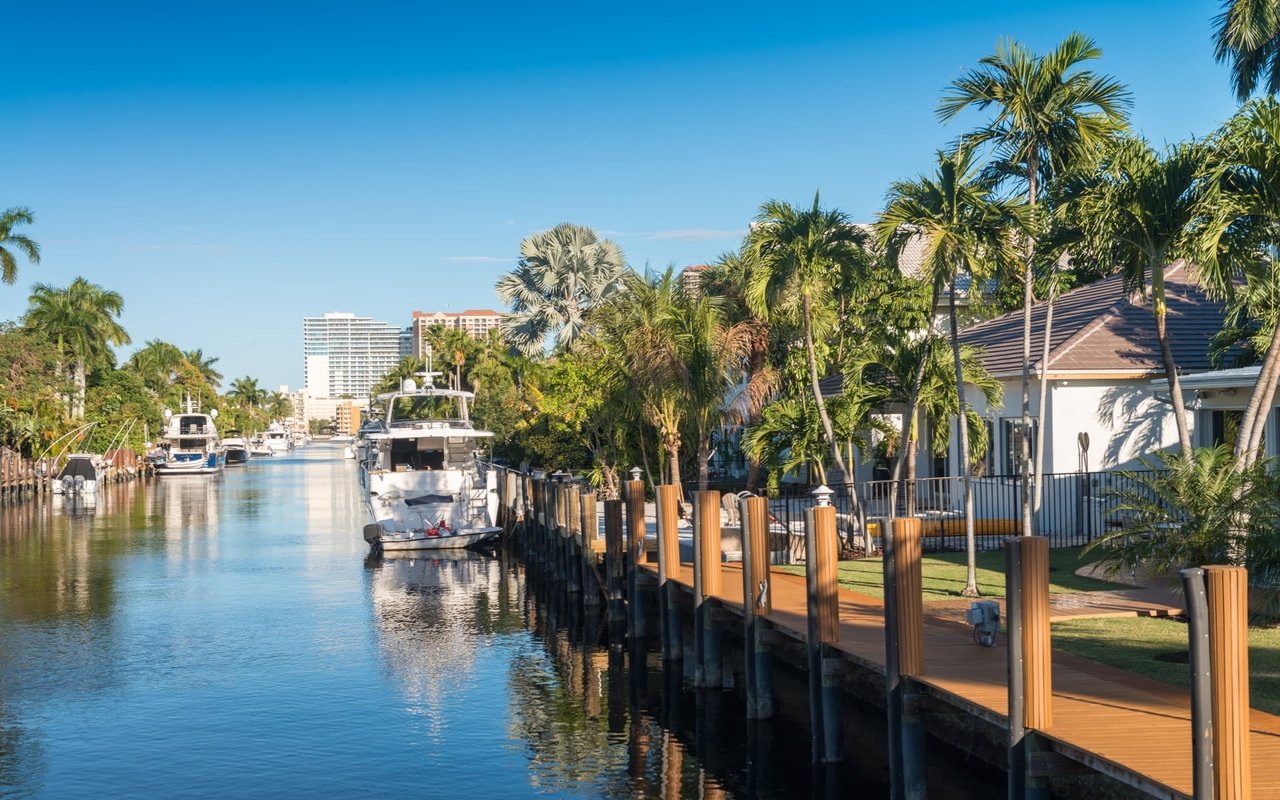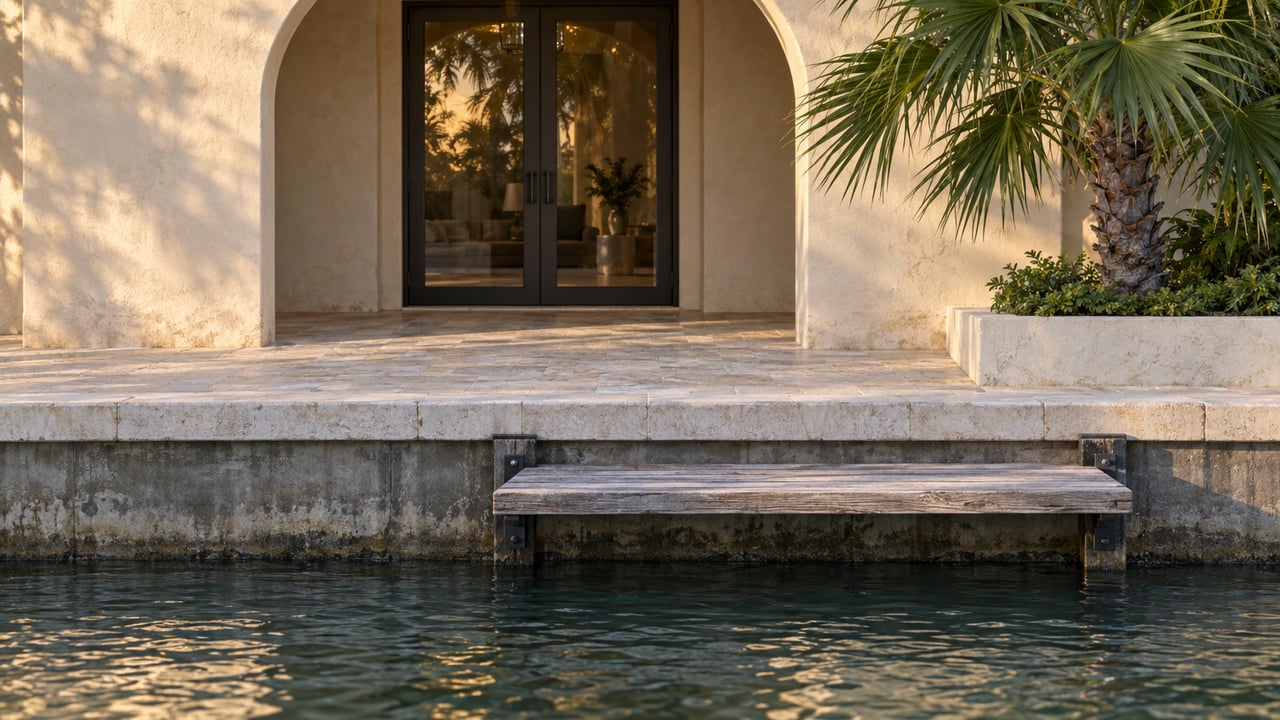
Scroll through waterfront listings in Lighthouse Point and you'll notice a phrase that shows up in some descriptions and not others: "no fixed bridges." It sits next to the dock length and the square footage like a footnote, easy to skim past. It shouldn't be. That three-word phrase is doing more to set the price of a canal-front home here than the number of bedrooms ever will.
Here's the part most buyers miss. Two homes on the same block, similar layout, similar dock, can sit on completely different boating routes to the ocean. One route reaches open water without needing to pass under a fixed span. The other has to clear a fixed span somewhere along its canal before it gets anywhere near the Intracoastal. Same view. Different asset. A January 2026 guide from MILLION Luxury put it plainly: "Ocean access is common marketing language, but in Lighthouse Point it is a technical promise that needs translation."
What the drawbridge actually protects you from
Lighthouse Point's whole identity runs on its canal system, and the system funnels toward one exit: the Hillsboro Inlet, under the SR A1A bascule bridge. That bridge has a closed vertical clearance of 13 feet and a 60-foot horizontal opening, and it runs on a public schedule, opening every 15 minutes between 7 a.m. and 6 p.m. and on signal outside those hours, a schedule set out in the federal regulation governing the crossing.
That bridge opens for you. That's the point of a bascule span. If your dock's only obstacle to the Atlantic is that drawbridge, your boat's height is not the limiting factor. You call it in, you wait for the scheduled opening, you go.
A fixed bridge is a different animal entirely. It doesn't open, ever, for anyone. If a canal route to the main artery runs under one of those, the clearance at that bridge is a hard ceiling on the tallest boat that will ever comfortably use that dock, no matter how good the dock itself is. That's the real distinction "no fixed bridges" is signaling, and it's why local listing copy treats it as a selling point rather than a footnote: a home whose canal route avoids fixed spans entirely can serve a sportfisher or a flybridge cruiser. A home behind one can't, permanently, regardless of what gets built on the lot later.
It's also worth remembering that clearance numbers aren't set in stone even on the movable bridge. FDOT has previously reduced the SR A1A bridge's vertical clearance by two feet during repair work, a temporary condition but a real one, which is exactly why boaters and marine surveyors treat any "deep water" or clearance claim as a snapshot rather than a permanent fact, confirming it against current notices before relying on it.
Three medians, one city, none of them pricing the bridge
If you've already looked at Lighthouse Point pricing on a portal or two, you've probably noticed the numbers don't agree with each other. That's not a data error. It's three different slices of the same market, and none of them capture the bridge-and-dock mechanics that actually separate one waterfront lot from another.
| Data source and window | What it measures | Reported figure |
|---|---|---|
| Active listings, July 2026 | Median list price across current inventory | $975,000, at roughly $480 per square foot, with a median 151 days on market |
| Active MLS-fed snapshot, week of July 19, 2026 | Median list price across 78 active listings | $2,450,000, with an average of 51 days on market |
| Closed sales, February 2026 | Median sale price for homes that actually transacted | $1,100,000, up 8.3% year over year, at $554 per square foot, with an average 83 days on market |
Look at the spread. A median built from everything currently listed lands near a million. A median built from an MLS-fed snapshot of 78 active listings runs nearly two and a half times that. A median built from what actually closed months earlier sits somewhere between the two. None of these numbers tell you whether a given lot clears the Hillsboro Inlet without ever meeting a fixed span, or whether it's boxed in behind one three canals back. That variable doesn't show up in a median because it isn't a price, it's a routing fact, and it applies lot by lot.
This is the piece a buyer comparing two similarly priced listings needs to separate out before assuming they're comparable assets at all.
What the longer days-on-market number is actually buying you
The February 2026 closed-sale data showed homes averaging 83 days on market, down from 128 days the year before, which reads like a market speeding up. The July 2026 active-inventory figure told a slower story, a median 151 days for homes still sitting unsold. Read together, they describe a market where the properties that transact tend to move at a reasonable pace, and the properties that linger tend to linger for a specific reason.
That reason is frequently a diligence question the buyer surfaced during inspection. A local market guide covering Lighthouse Point noted that with longer days on market and homes closing below list price on average, buyers have room to negotiate, particularly when an inspection uncovers seawall, dock, or route constraints. That's the mechanism working in the open: a home with an unresolved bridge, depth, or seawall question sits longer and sells softer, because the buyer pool that can actually use the dock as marketed is smaller than the buyer pool that saw the listing photos.
If the home's own dock or canal geometry limits usability for a larger vessel, that isn't necessarily a dealbreaker. Port 32 Lighthouse Point, a managed marina minutes from the Hillsboro Inlet, is the kind of local option buyers lean on to complement a primary residence dock, letting a household keep a smaller-dock property they love while mooring a larger vessel somewhere built to handle it.
A route-first diligence order, before you write an offer
Most buyers start with the house. For a Lighthouse Point waterfront purchase, the more useful order starts with the water.
- Map the full route from the dock to the inlet and list every bridge along it, fixed or movable, before you evaluate the house itself.
- Measure your own boat's air draft, length, beam, and draft, and compare the air draft against the SR A1A bridge's 13-foot closed clearance if your route passes it.
- Request a recent depth sounding at the dock, taken at low tide, rather than relying on a listing's "deep water" description.
- Pull the city's permit record for the dock, lift, and seawall to confirm what's actually approved versus what's been added informally.
- Get a seawall inspection if the wall shows age or wear, and ask for its estimated remaining life alongside replacement cost.
- Confirm posted no-wake and slow-speed zones along your route, since Florida law authorizes local boating-restricted areas that affect daily usability, not just resale value.
Do this before comparing price per square foot across listings. A dock that clears every test above is worth more than its finish level suggests. A dock that fails one is worth less than its price suggests, and the gap between those two outcomes is the part no portal median will ever show you.
FAQ
Does a fixed bridge on the route disqualify a home from being genuinely waterfront? No. It changes who the ideal buyer is. A home behind a fixed bridge still offers real canal-front living, it just serves a smaller center console, a pontoon, or a day boat better than it serves a sportfisher or a flybridge cruiser. The lifestyle is legitimate. The vessel math is just different.
Can I verify a specific property's bridge and depth situation before I write an offer? Yes, and you should treat it as standard due diligence rather than an optional extra. Request the route documentation, a recent dock sounding, and the seawall and dock permit history as part of your offer contingencies, the same way you'd request a home inspection.
Lighthouse Point rewards buyers who read the water before they read the floor plan. If you're comparing waterfront listings here and want someone to walk the actual route with you before you commit to a number, Austin Bergman offers a confidential consultation to work through the dock, bridge, and depth questions a listing sheet won't answer on its own.
This article is general information, not legal, tax or financial advice. Consult a qualified professional about your situation.