Stand at the foot of Commercial Boulevard in Lauderdale-by-the-Sea and you will see the postcard first: the low skyline, the public beach access, a scatter of surfboards and bikes leaning against a seawall. Then you will see the fence. Anglin's Pier, the structure that gave this stretch of coast its name and its identity, has a gap in the middle where Hurricane Nicole tore out roughly eighty feet of decking in November 2022. The café and bait shop at the entrance still open every morning. The rest of it has been closed to the public since that storm, and closed in one form or another since Hurricane Irma first damaged it back in 2017.
If you are comparing Lauderdale-by-the-Sea to Pompano Beach, Galt Ocean Mile, or Fort Lauderdale Beach because you like the idea of a walkable village built around a fishing pier, the pier is worth understanding before you understand anything else about the town. Not because it changes whether you should buy here. Because the reason it has stayed broken for nine years is not a maintenance story. It is an incentive story, and incentive stories tell you something about how a place actually functions that a listing photo never will.
Nine years, four storms, and a permit that keeps expiring
The timeline is longer than most buyers assume. Irma caused the first substantial damage in September 2017. The town issued a notice of violation for lack of maintenance the following March, and by 2019 the property was accruing code compliance fines of $250 a day because the promised repairs hadn't happened. A new completion deadline was set for March 2020. COVID stalled it. Then, in November 2022, Hurricane Nicole took out the middle section entirely, and more storm damage followed that December. The pier has been closed to foot traffic ever since.
What's happened since is a case study in how slowly a private repair moves through public permitting. Getting the project this far has required sign-off from the Army Corps of Engineers, the Florida Department of Environmental Protection, the National Oceanic and Atmospheric Administration, and Broward County's Resilience and Environmental Department, on top of the town's own code process. A benthic survey of the site was completed in 2023. Geotechnical borings, requested in March 2025, wrapped in January 2026. FDEP issued an exemption letter that April, and the Army Corps application was marked complete the following month. Then, on March 14, 2026, the existing Army Corps permit itself expired. The town's posted schedule at that point called for a new permit by April, contractor bidding in May, and a construction start in July, on a project the town's own timeline estimates will take two more years once it starts. The town has not posted a public update confirming whether that construction start actually happened on schedule.
Run that forward and the earliest realistic reopening is 2028, assuming no further storms hit a structure that sits directly in the surf zone during hurricane season. As of an April 2026 town commission meeting, the fines the pier's owner has racked up for the code violation reached $375,000.
Who actually owns the problem
Here is the detail that matters more than the timeline. Anglin's Pier is privately owned, by Fisherman's Pier Inc., and the town has never owned it. At that same April 2026 meeting, Development Services Director Jhanelle Campbell told commissioners the project was still in design and coordination, with owner Spiro Marchelos confirming the geotechnical work was done. The conversation that followed was not about engineering. It was about whether to keep going at all. Commissioner Richard DeNapoli noted he'd found three comparable Florida piers that were damaged and simply never rebuilt. Vice Mayor Randy Strauss put the choice to the room directly: keep supporting the rebuild, or cut the town's losses and move on. Mayor Edmund Malkoon questioned why the town was even weighing in, given it has no ownership stake in the outcome.
Marchelos, for his part, has been blunt about the economics. Admission fees and bait shop rent were never going to cover a rebuild estimated at $20 million or more, and he told the commission he sees little upside for himself in finishing it. The fines that are supposed to force his hand carry real dollar figures, but there is already open discussion on the commission about forgiving most or all of them once the work is done, which weakens the one lever the town actually has.
That is the mechanism worth understanding if you are evaluating this town as a buyer. The party with the ability to fix the landmark has the weakest financial reason to do it. The party with the strongest reason to see it fixed, the town and its residents, has no legal ownership and limited enforcement leverage over a structure that sits partly on land and partly in federally regulated water. Nobody in that arrangement is acting irrationally. The pier has simply fallen into the gap between two incentive structures that were never designed to solve a problem like this quickly.
The Pompano contrast
The clearest way to see this is to look one town north. Pompano Beach's municipal pier suffered comparable storm damage and was rebuilt in roughly four years, because the city owned it, controlled the capital budget, and could move the project without waiting for a private owner's financing decision. Residents have raised exactly this comparison at Lauderdale-by-the-Sea commission meetings, and the town's own answer has been consistent: Pompano's pier is city property, this one is not, and that single fact explains most of the gap between a four-year rebuild and a nine-year closure with no firm reopening date.
What already happened to the blocks around it
This isn't an abstract governance question. The Lauderdale-by-the-Sea Chamber of Commerce has already put a number on the cost of the vacancy. Its chair, Howard Goldberg, told the commission that thirteen businesses in the immediate area closed over the prior year, and while he was careful to say not all of that is attributable to the pier, he was equally direct that it has been a factor. His description of the shift was plain: the pier used to be the draw that brought residents and tourists downtown, and its current state now works against the same blocks it used to anchor.
If you are underwriting a purchase near Commercial Boulevard partly on the assumption of foot traffic, a working pier, and the retail mix that traffic supports, that assumption needs updating. The blocks immediately around the pier are living with an eyesore, in the words used at the town's own meetings, not a landmark, and have been for several years running.
What actually holds this town's value
None of this means Lauderdale-by-the-Sea's appeal is built on sand. It means the appeal was never really the pier in the first place, even though the pier is the image most often used to sell it. Two structural facts matter more, and neither depends on Fisherman's Pier Inc. resolving its permitting.
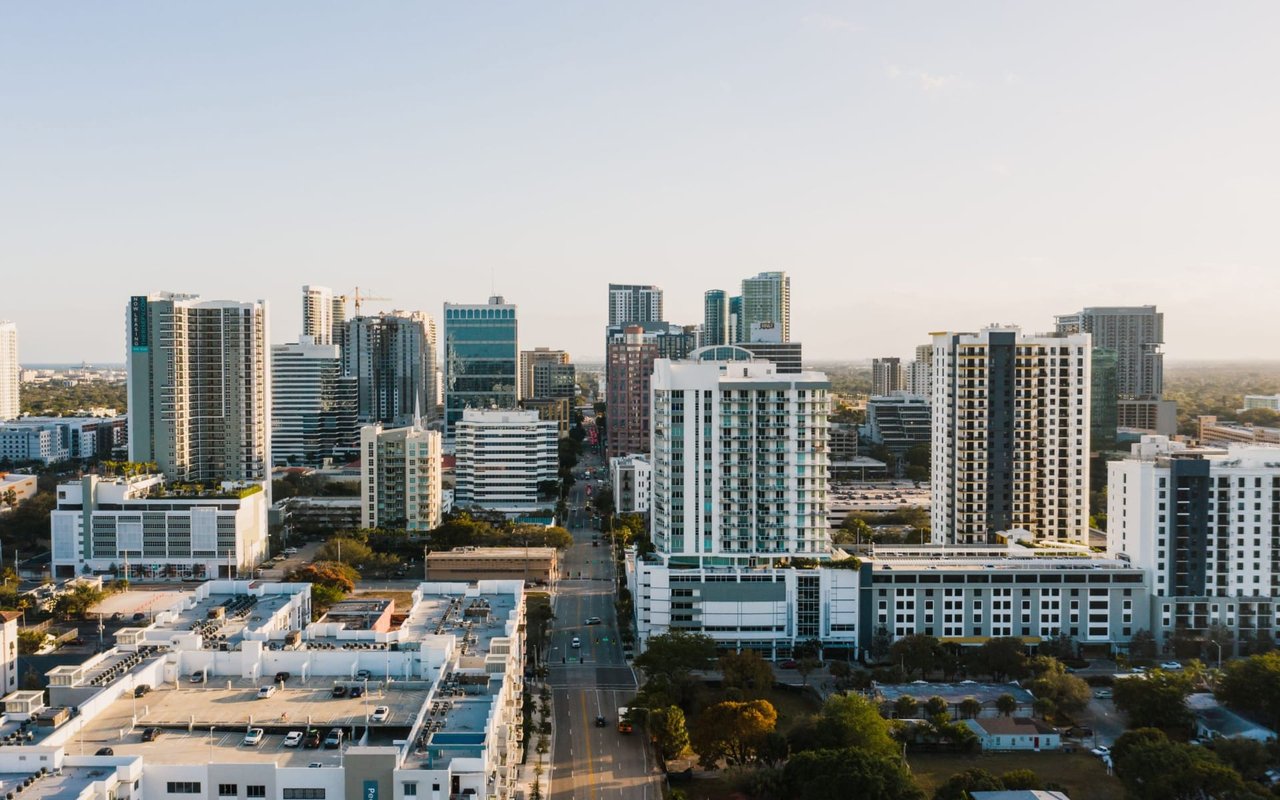
The first is zoning. Condo construction in the town's core has long been capped at four stories, which is why Old Town still reads as low-rise and walkable while larger buildings cluster north of Pine Avenue along the beach. That cap is a town ordinance, not a marketing choice, and it is the actual reason this stretch of coast feels different from the high-rise corridors to the south. It does not expire with a permit and it is not subject to a private owner's balance sheet.
The second is the reef. The shore-accessible reef that runs off this coastline, and the diving and snorkeling built around it, functions independently of the pier's condition. It is the reason the town has long marketed itself around its underwater access rather than its boardwalk, and it is one of the few claims in the town's identity that has not required a single permit renewal in nine years to keep being true.
A diligence checklist worth running before you write an offer
- Ask directly what percentage of a property's presumed value rests on proximity to the pier versus proximity to the beach access, the reef, or the walkable four-block core, and price accordingly.
- Check the town's own Anglin's Pier Timeline page before assuming any marketing material's "steps from the pier" language reflects a current amenity rather than a future one.
- If you are buying specifically for the retail and dining mix on Commercial Boulevard, ask a local broker which storefronts have turned over in the past two years and why, rather than relying on a drive-by impression.
- Treat any reopening estimate as provisional. The project has missed multiple prior completion dates going back to 2019, and its permit has already expired once, in March 2026.
FAQ
Is the pier going to reopen? The town's schedule as of spring 2026 called for construction to start by mid-2026, with a roughly two-year build pointing to a 2028 opening at the earliest. Town commissioners have also openly discussed abandoning the project instead of finishing it, so treat any date, including that one, as an estimate rather than a commitment.
Why doesn't the town just take it over and fix it? The pier has always been privately owned. The town has no legal authority to spend public funds on a structure it does not own, and its main enforcement tool, daily code fines, is widely expected to be reduced or waived once work is complete, which limits how much pressure it can actually apply.
Does this affect home values near the pier right now? The Chamber of Commerce has tied recent business closures on the surrounding blocks partly to the vacancy. That is a documented local effect worth factoring into any purchase decision in the immediate area, separate from the town's broader appeal.
Understanding which parts of a coastal town's identity are permanent and which are pending permits is exactly the kind of groundwork that should happen before an offer, not after closing. If you are weighing Lauderdale-by-the-Sea against other stretches of the Fort Lauderdale coastline, Austin Bergman can walk you through what's actually operating, block by block, and what the town's zoning and geography guarantee regardless of what happens at the pier. Schedule a confidential consultation to talk through it.