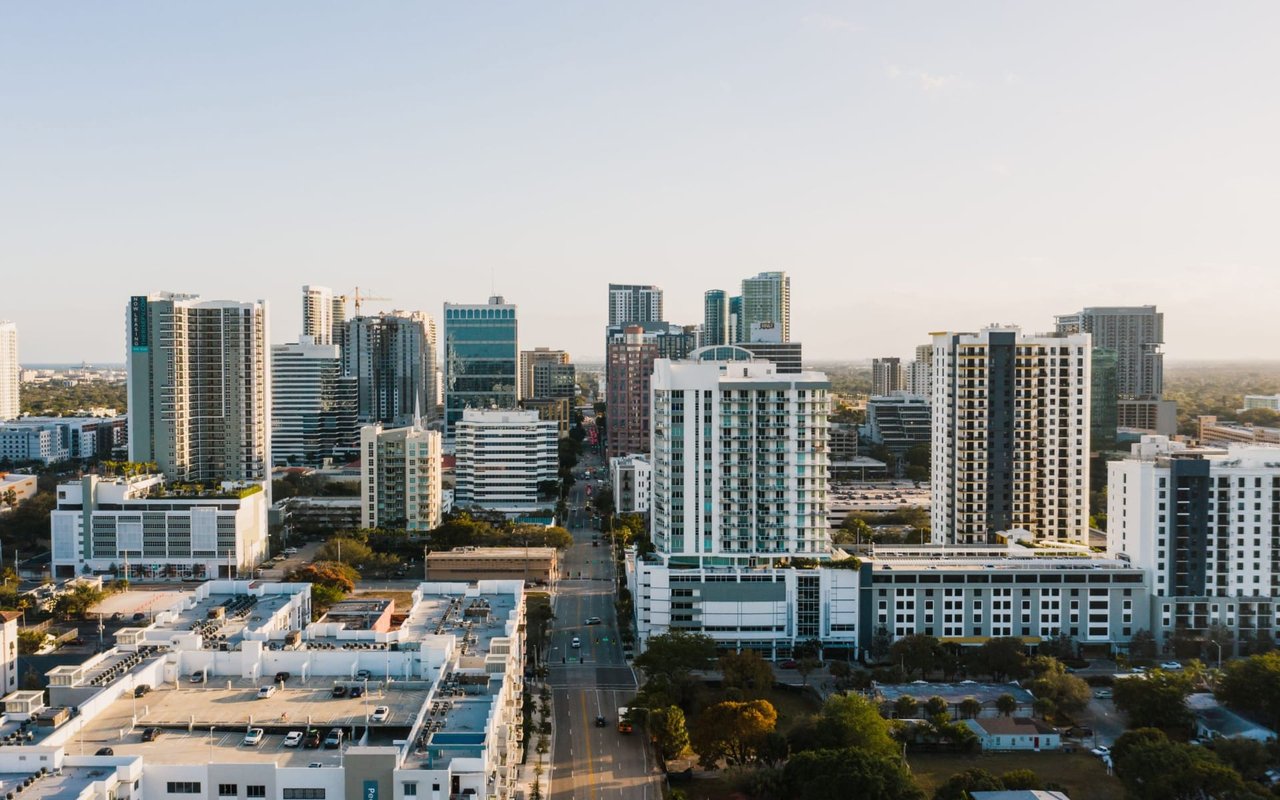
In late October, the Federal Transit Administration gave Broward County's coastal commuter rail plan the biggest push it has had in two decades. The Sun Sentinel reported a $164 million grant toward a $712 million project, with service projected to begin in 2032. The same article reported that the line stops short of the New River, because Broward County and the City of Fort Lauderdale still have not agreed on whether trains should cross it on a new bridge or in a tunnel.
That split matters to anyone comparing Downtown Fort Lauderdale addresses this winter. The funded part of the rail system now has a route, a cost and a target year. The part that runs through the middle of downtown has competing concepts and cost estimates but no agreed route, cost or date, and the two options on the table would put very different things on the same few blocks of riverbank.
The Federal Money Ends at 17th Street
The project the FTA moved into its Engineering phase on October 23 is Broward Commuter Rail South. Its October 2026 FTA profile describes 10.5 miles and three stations, running from Aventura to South Fort Lauderdale, with a total capital cost of $712,025,525. According to the Sun Sentinel, the line would stop at new stations in Hollywood and at Fort Lauderdale-Hollywood International Airport, then end near Broward Health Medical Center between 15th and 17th streets.
The federal share is capped. The FTA's project profile sets a maximum Capital Investment Grant of $163,765,871, about 23 percent of capital cost, payable only if a Full Funding Grant Agreement is signed. Broward County Transit expects that agreement in mid-2027 and revenue service in late 2032. Both dates are forecasts. The Sun Sentinel also reported that Broward's talks with Brightline over an operating agreement have slowed while a Florida East Coast Railway lawsuit against Brightline sits in arbitration. A court hearing in that case is set for mid-January.
Broward County's own New River Crossing FAQ, updated September 8, 2026, says service to northern Broward "requires passage across Fort Lauderdale's New River." That northern segment, Broward Commuter Rail North, has a Downtown Fort Lauderdale station in its plan. The County Commission adopted its locally preferred alternative on April 22, 2025. So the station that would serve downtown condo owners depends on the river decision, and October's grant does not touch it.
Sixty Trains Over a Four-Foot Bridge
The crossing in question is the FEC's two-track bascule bridge, built in 1978 and sitting about four feet above the water. The City's New River Crossing project page says about 60 trains cross it each day now and estimates that number would double once commuter service runs. The bridge stays down while trains pass and goes up for boats. It is the one span every vessel heading upriver has to get through.
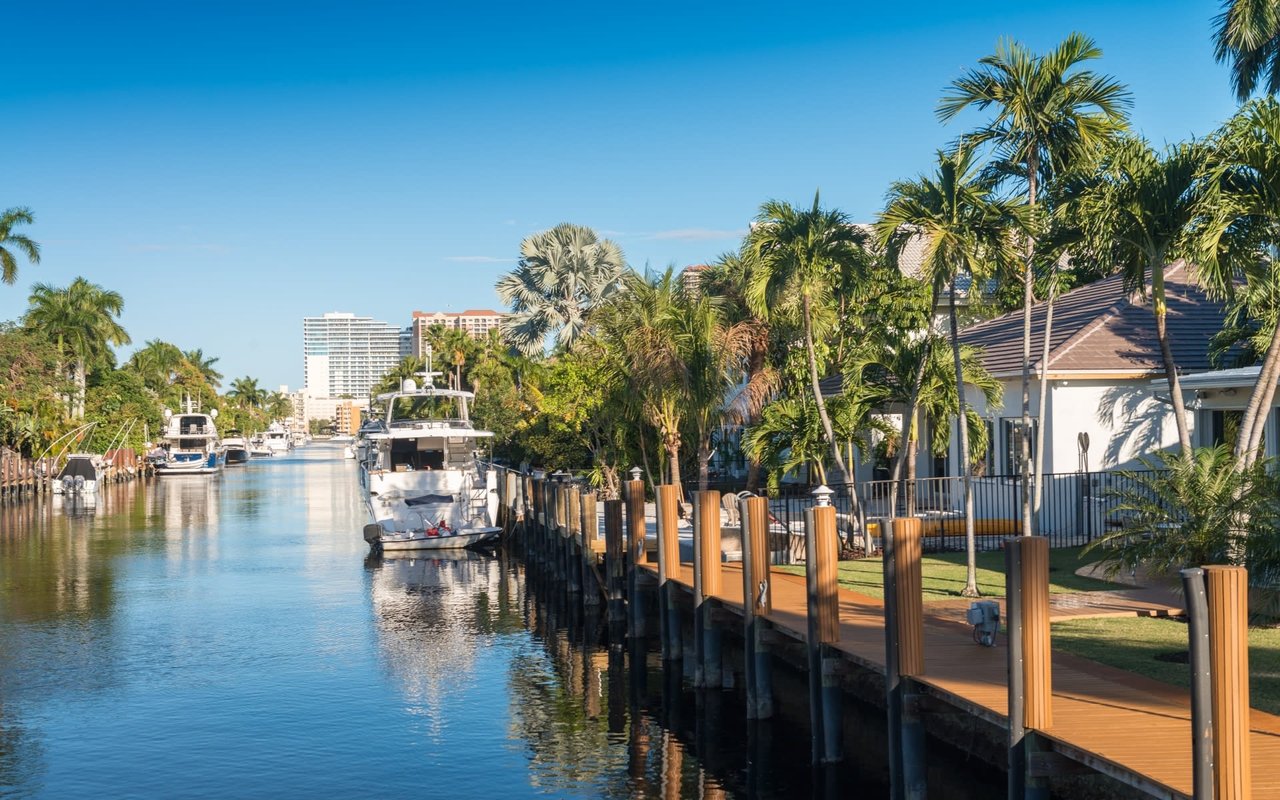
West of it sit the yards, docks and neighborhoods that make the New River a working waterway. Safe Harbor Lauderdale Marine Center, a 65-acre yacht repair facility, is at 2029 SW 20th Street. The City's own Cooley's Landing and New River/Downtown Docking share an address at 450 SW 7th Avenue. The Sun Sentinel reported in 2023 that the Water Taxi of Fort Lauderdale runs its operations from just west of the bridge.
In January 2023 the bridge was stuck in the down position for most of a day. During that outage, the Sun Sentinel reported, no boat of any kind could reach the yachting centers and neighborhoods west of downtown, and eastbound boaters were held west of the span. Phil Purcell, president of the Marine Industries Association of South Florida, told the paper that yard customers west of the bridge work to tight schedules. As an example he described an owner who had just spent seven figures on yard work and could not leave for a Caribbean charter. For someone keeping a boat upriver, this is the clearest picture of how much one bridge controls the trip out to the Intracoastal.
Two Plans for the Same Corner
The County backs a two-bridge system. A passenger bridge about 40 feet above the water would carry Brightline and commuter trains. A separate freight bridge about five feet above the water could stay open more often, because it would no longer have to come down for passenger trains. Both would keep the 60-foot navigable channel. The City has reaffirmed a tunnel as its locally preferred alternative, and on February 3, 2026, the City Commission received an update on that work and directed staff to respond to the County. In May the City won a $650,000 federal Regional Infrastructure Accelerator grant for preliminary engineering, environmental review and financing work on the crossing.
| County two-bridge system | City tunnel concept | |
|---|---|---|
| Height or depth | Passenger bridge about 40 ft above water, freight bridge about 5 ft | Bored under the river, clear of the existing bridge piles |
| Estimated construction cost | $470 to $495 million, per TYLin for the County | $888 million per the City's BDO study; $1.5 billion per the County's Jacobs review, both in 2023 dollars |
| Annual operations and maintenance | $1.482 million | $2.08 million per Jacobs |
| Street effects described | Riverwalk pedestrian crossing stays, SW 2nd Street stays open, SW 5th Street closes | Alignment runs from SW 7th Street to Sistrunk Boulevard |
| Downtown station | Not specified in the County materials | Platform beneath Broward Boulevard, entrance at the future Government Center, 201 W Broward Blvd |
The cost figures come from the County's FAQ and its New River Crossing page, both updated September 2026. The street effects for the bridge come from the County's September 2024 bridge study. The tunnel alignment and station placement come from the City consultant's April 2024 tunnel report. The two tunnel estimates measure the same idea differently, which is why the City's $888 million figure and the County's $1.5 billion figure can both be accurate on their own terms.
The neighbors at the crossing make the choice concrete. The County's September 2024 study describes Riverwalk Park and the historic Old Fort Lauderdale section to the northwest of the bridge, a midrise mixed-use building on the northeast corner, a high-rise condominium to the southeast, and the South Florida Boat Club's small marina and docks to the southwest. The same study lists Riverwalk Park North and South and Florence C. Hardy Park inside the project buffer. It also flags possible effects on nearby historic properties, including views, noise and vibration. The northwest corner is the Himmarshee district, home to the Fort Lauderdale Historical Society's Hoch Heritage Center, the New River Inn museum and the King-Cromartie House. The City's project page says it prefers a tunnel because a tunnel minimizes effects on marine traffic, adjacent real estate and the downtown environment.
Reading a Downtown Address Against the Corridor
For a buyer, a downtown condo near the FEC corridor comes with one open variable whose timing nobody has published. As of the Sun Sentinel's November 14 report, the County and City still had no crossing agreement, and no construction schedule exists for the river. For comparison, the FTA's forecast for the southern segment, which has no river to cross, runs to late 2032. A buyer can't count on the question being settled by any particular year, so it's worth pricing in from the start.
Three questions sort the addresses, and slip location comes first. A boat kept east of the FEC bridge reaches the Intracoastal without it. A boat kept upriver at Cooley's Landing or near the Riverside yards depends on the current four-foot span until something replaces it. Both proposals promise more open water time, the County's by lifting passenger trains 40 feet up and the City's by putting them underground.
Proximity to the crossing matters next. Units facing Riverwalk, Esplanade Park at 400 SW 2nd Street, or the blocks just south of the river are the views and street patterns a 40-foot bridge would change and a tunnel would mostly leave alone. A buyer comparing two otherwise similar towers can reasonably price that difference, since the decision could go either way. Our earlier look at how the New River's two parks split the calendar shows how much of daily downtown life already happens on these banks.
Station access is the last question, and the most speculative. The City's tunnel concept puts the commuter platform under Broward Boulevard next to the existing Brightline station, with the entrance at the future Government Center. Under that plan, Brightline, the bus center and commuter rail would share one hub on Broward Boulevard. Brightline's average one-way fares in its September report were $25.88 for short trips and $74.20 to Orlando. The County has said commuter service is meant to cost less. If you're weighing condos across the Downtown Fort Lauderdale towers, a building's distance from Broward Boulevard is a reasonable thing to check now. Our guide to what the downtown condo median leaves out covers the building-by-building side of that comparison.
FAQ
Does the October federal grant pay for the New River crossing? No. Broward Commuter Rail South ends at a terminus south of the river, and the County describes service to northern Broward as a separate step that requires crossing the New River.
When could commuter trains run? Broward County Transit projects revenue service on the southern segment in late 2032, as listed in the FTA's October 2026 profile. Downtown service across the river has no published date.
Where would a downtown station go? The County lists a Downtown Fort Lauderdale station for Broward Commuter Rail North. The City's April 2024 tunnel concept places it beneath Broward Boulevard, with an entrance at 201 W Broward Blvd.
If you're weighing a riverfront condo or a home with a slip along the New River, Austin Bergman can walk you through where each building sits relative to the FEC corridor, the crossing site and the Broward Boulevard hub before you make an offer. Schedule a confidential consultation.